How Professional Lawn Care Service Helps Prevent Weeds and Bare Spots
Professional lawn care service helps homeowners and property managers in Livingston, NJ, protect their turf from weeds and bare spots before those problems become costly to fix. Lawns in the Livingston area face real seasonal pressure, from hot, humid summers to cold winters that stress grass roots and leave soil vulnerable to invasion. Understanding what causes these problems, and how a structured maintenance program addresses them, can make a noticeable difference in how a lawn looks and performs year-round.
Why Do Lawns Develop Bare Patches and Weeds?
Bare spots and weeds often share the same root causes. Compacted soil prevents grass roots from getting enough water, air, and nutrients, which weakens turf and opens the door for weeds to move in. Heavy foot traffic, poor drainage, disease, insect damage, and inconsistent mowing heights can all thin out a lawn over time.
New Jersey's clay-heavy soils common across Essex County make compaction an especially common issue. When turf thins out in these conditions, opportunistic weeds like crabgrass, dandelions, and broadleaf species fill the open space quickly. Once established, these weeds compete aggressively with desirable grass for the same limited resources.
What Lawn Treatments Help Prevent Weeds?
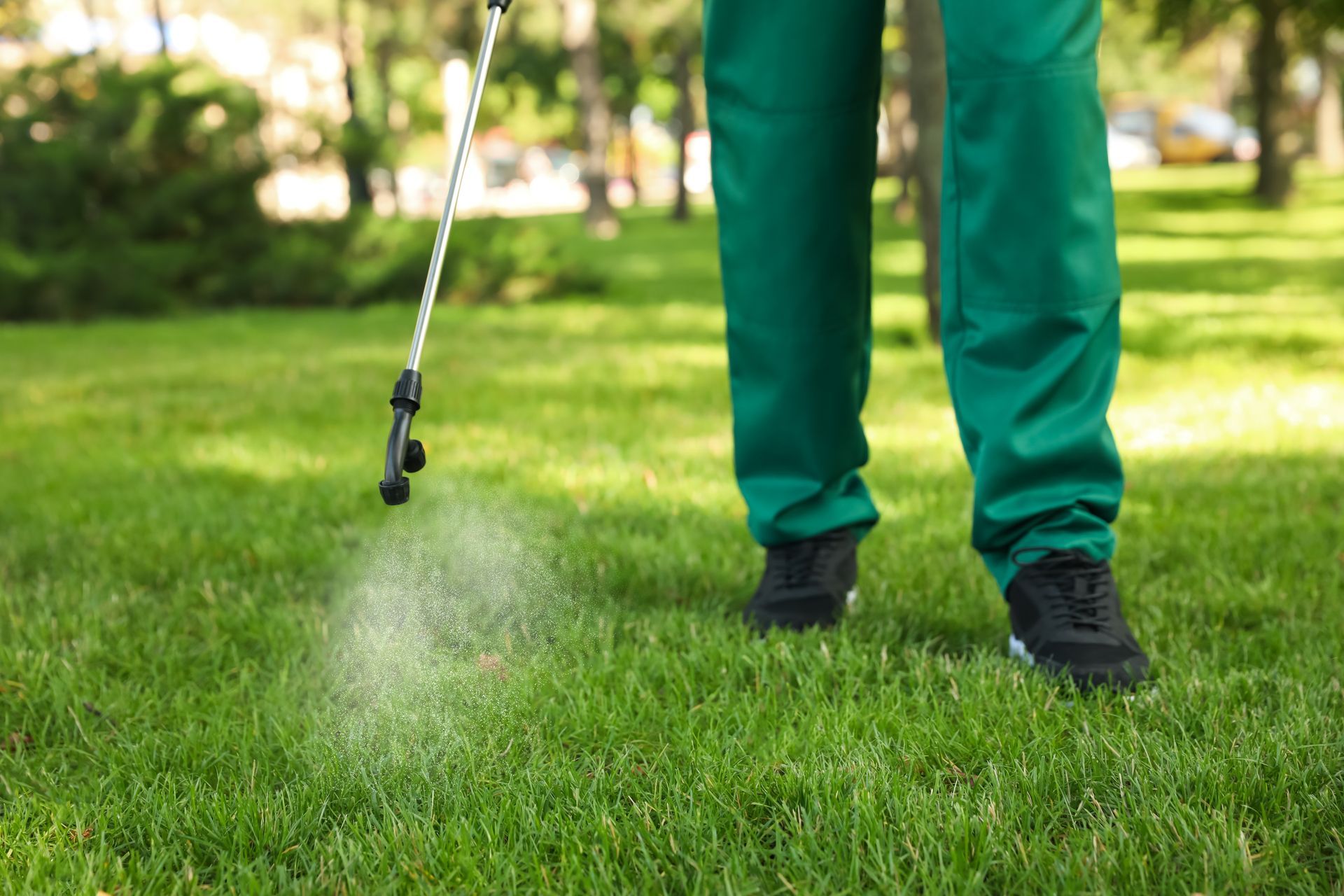
Pre-emergent and post-emergent herbicide applications form the backbone of effective weed control. Pre-emergent treatments stop weed seeds from germinating in the first place, while post-emergent herbicides target weeds that have already sprouted. Timing these applications correctly, particularly around New Jersey's spring and fall growing windows, is critical to their effectiveness.
Fertilization plays an equally important role. A well-fed lawn grows thick and dense, leaving fewer open patches where weeds can take hold. Professional programs typically pair fertilization with soil pH testing to ensure grass can actually absorb the nutrients being applied. Lawns with overly acidic or alkaline soil often respond poorly to fertilizer alone.
Core aeration is another treatment that directly addresses bare spots. By pulling small plugs of soil from the ground, aeration relieves compaction, improves water penetration, and allows fertilizer to reach the root zone more efficiently. Overseeding following aeration can fill in thin or bare areas with newer, hardier grass varieties better suited to local conditions.
How Seasonal Timing Affects Results
A lawn care service in Livingston, NJ, that follows a seasonal schedule can address problems as they emerge rather than after they have spread. Spring treatments focus on weed prevention and fertilization to encourage strong early growth. Summer visits monitor for pest pressure and drought stress. Fall is the most important season for overseeding and aeration in North Jersey, when cooler temperatures support strong root development before winter arrives.
Professional Maintenance vs. DIY Lawn Care
DIY lawn care can maintain a lawn at a basic level, but professional maintenance programs go several steps further. Professionals identify grass type, test soil conditions, and build a treatment schedule around the specific needs of a property rather than applying generic products.
A lawn care service also brings calibrated equipment, licensed applicators, and the right product formulations for New Jersey's regulated environment. For example, commercial lawn care programs often include customized fertilization schedules, integrated pest management, and targeted herbicide applications that are difficult to replicate with off-the-shelf products.
Frequency matters too. Most lawns in North Jersey benefit from professional visits roughly five to seven times per year, covering spring fertilization, pre-emergent weed control, summer and fall treatments, and dormant-season preparation.
Get Professional Lawn Care Help Serving Livingston, NJ
Montville-based Greenwood Tree and Lawn Service proudly serves Livingston and the surrounding North Jersey communities. If your lawn has been struggling with weeds, thin turf, or recurring bare spots, a professional program may help address the underlying causes, not just the symptoms. To learn more about available treatment options, visit the
lawn care services page. You can also call
(973) 335-6650 to speak with a lawn care professional. Find
Greenwood Tree and Lawn Service on Google Maps to read reviews and get directions.